Showing posts with label Animal. Show all posts

Wednesday, May 4, 2011

Why Hard to Hit a Fly

How many times have you managed to swat a fly by hand? Difficult is not it? The secret behind this ability has now been known explanation. 
 
For 20 years researching biomechanics wing flies, Michael Dickinson of the California Institute of Technology (Caltech) recently solved it today. That was because he was always curious about the simple question and often asked people she met.

"Now I have the answer," said Dickinson, who conducted the study with Esther M. and Abe M. Zarem. He discovered the secret maneuver after record number of blow flies that threatened using a digital camera that can record speed and high resolution. They found that flies can identify threats based on location. His brain will calculate how far the threats against him before deciding to flapping wings and fled.


After predicting the direction of the threat, foot rests to fly in the opposite direction. All the preparation can be done to get away very quickly, just 100 milliseconds after it detects a hazard.
"This shows how quickly the fly brain to process sensory information into an appropriate response to the movement," said Dickinson. In fact, flies regulate posture as a big threat.


That is, the fly has integrated well between visual information from eyes and metasensorik information on his feet. These findings provide clues about the nervous system of flies and shows that the brain contained the threat position mapping system.

"This is a transformation of stimuli into motion a complex and little subsequent research to find parts of the brain that govern it," he said.


Of these systems, Dickinson also can recommend the most effective way swat a fly. According to him, hitting the best time flies when her position was not ready to fly, so the time he needs to anticipate these threats are relatively much longer. Of course not easy to perform accurate movements of less than 100 milliseconds.
READ MORE - Why Hard to Hit a Fly

Tuesday, April 12, 2011

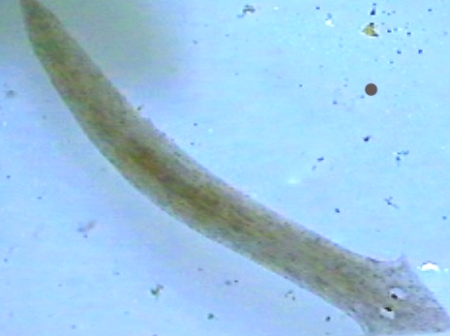
The Planaria Worm

The ability of a worm Planaria to regrow severed body parts, caused by a gene. It was discovered by scientists from the University of Nottingham.


This research was inspired by scientists, to be able to make this happen in humans. Thus, it is not impossible if one day humans can regenerate damaged organs or aging.
The study, led by Dr. Aziz Aboobaker, suggesting a gene called 'SMED-prep'. These genes play a role to improve and regenerate limbs like the head and brain of the worm Planaria.


Reported by the Daily Mail, Planaria worm contains adult stem cells that constantly divide and can be changed to replace all lost body cell types. This worm also has a set of genes that work to grow body parts cut off with the right size and in the right place.
"This amazing worm opens our eyes to make more complete observations on tissue regeneration in the worm. This simple Animals can regenerate itself a miraculous way," said Aboobaker.
In this study they found that the presence of SMED-prep is very important so that amputated the head and brain can grow back in the right place.
In addition, stem cells can still be worms 'persuaded' to form the brain cells resulting from the activity of other genes that are not related. Without SMED-prep, these cells do not organize themselves to form a normal brain.
READ MORE - The Planaria Worm

Friday, April 8, 2011

10 Fastest Bird in the World

1. Spine-tailed swift, or also called White-throated Needletail (scientific name: Hirundapus caudacutus), Maximum speed = 171 kmh.


2. Frigate bird, maximum speed = 153 km/jam.


3. Spur-winged goose, Maximum speed = 142 kmh.


4. Red-breasted merganser, maximum speed = 129 kmh


5. White-rumped swift, maximum speed = 124 kmh.


6. Canvasback duck, maximum speed = 116 kmh.


7. Eider duck, maximum speed = 113 kmh.


8. Teal, Maximum speed = 109 kmh.


9. Mallard, maximum speed = 105 kmh.


10. Pintail, maximum speed = 105 kmh.
READ MORE - 10 Fastest Bird in the World

Monday, February 21, 2011

Age of Ancient Bird Fossil Found in China

Although he was not as old as Archaeopteryx, which is believed to be the oldest bird species in the world today, a new fossil found in China was found in the intact condition. Body structure might provide new clues for scientists to study the life histories of birds from the age of dinosaurs to modern birds.

The fossil was found in the paelontolog China and Britain from the edge of the lake in the forest around the northern part of Hebei Province during the expedition in 2005-2006. The scientists gave the name which means Eoconfuciusornis zhengi Confucius bird.

"Eoconfuciusornis provide new piece in the puzzle of evolution from Archaeopteryx to be more advanced birds," said Zhou Zhong, co-author of the study report from the Institute of Vertebrate Paleontology and Paleoanthropology in Beijing.

Conditions are intact fossils probably because the bird is submerged into the lake and buried by sediment in the bottom of the lake in the Cretaceous Era between 120 million years until 131 million years. Over millions of years buried, their bodies undergo a process of fossilization and preserved in fossilized sediments.

His figure was very similar to modern birds with feathered wing shape and symmetrical arrangement of tail feathers. Fur color varies from brown and black that could be the actual color or changes color from blue, red, and yellow like a modern bird.

Characteristics are more like modern birds than Archaepteryx who still has the physical characteristics of dinosaurs, such as teeth and long bony tail. Bone and muscle structure also supports the ability to fly more nimble maneuvers. However, both may share the same weakness fly from a flat surface, so easy to attack the opponent.

The animal probably lived in trees and has a nail and a long tail feathers that are important to help balance the body while perched on the branch. He seemed to glide to the surface of the lake astute to catch fish as prey
READ MORE - Age of Ancient Bird Fossil Found in China

Sunday, February 20, 2011

Researchers Find Evidence of Mass Destruction in the Past

The fossil is believed to be evidence of mass destruction which occurred about 252 million years ago. 
 
Fossils of ancient dolphins found in Louping
At an excavation site in Luoping, Yunnan province, southwest region of China, researchers found almost 20 thousand fossils. The discovery of fossils in the number of very much this is tantamount to the discovery of a complete ecosystem. 

Reptiles, fish, and fossils of other marine life complete a number of smaller-sized fossils found earlier.

A collection of fossils was believed to be evidence of the mass destruction of living things on Earth, due to volcanic activity that occurred at the end of the Permian era, about 252 million years ago.

Mike Benton, Professor of Bristol University School of Sciences and Shixue Eearth Hu of the Chengdu China Geological Center said the limestone layer 16 meters thick protective of these fossils come from the past. "At that time, the South China still is a giant island that was slightly above the equator and has a tropical climate," he said.

"The discovery of fossils of land plants also indicate that this aquatic communities living near forest tree ferns," said Benton, as quoted by the Examiner, December 23, 2010.

The fossils were found, said Benton, with a very well kept, with more than half remained in complete condition, including soft tissue. "It seems they were protected by layers of microbes throughout the period that immediately closed the living body that not long after they die," he said.

Throughout its history during the last 4.5 billion years, the planet Earth has experienced several mass extinction events. However, quoted from RedOrbit, terrible events that befall the ecosystem in the Permian era took place in the scale of "not unprecedented" and cause the extinction of 96 percent of marine life and 70 percent of terrestrial vertebrates.

Only one in ten species survived and they became the basis of recovery of life in the next period, called the Triassic.

"The recovery of mass destruction seems to take between 1 to 4 million years," said Benton. "The incident at the end of the Permian is very powerful, killing about 90 percent of the species to ecosystems have nothing left to resume their lives," said Benton.

Currently, researchers focused on finding clues that could help them determine what species survived the incident at the end of the Permian era. Furthermore, the fossils 'treasure trove' of the Permian era, will be used by researchers to study how certain species can adapt and survive after experiencing a mass extinction.
READ MORE - Researchers Find Evidence of Mass Destruction in the Past

Thursday, February 17, 2011

Sea Lamprey. What is it??


Petromyzon Marinus, sea lamprey, sea eel or fish blood sucking leeches. (Thinkquest.org)

A number of Canadian researchers who study the whale's life trying to prove the theory that the sea eel attached to the whale's body for the ride is simply wrong.

Sea lampreys or Petromyzon Marinus (sea eel name it), often seen attached to the whale's body. This eel has a similar funnel mouth full of teeth and tongue like a razor blade.

From a few sightings, eels were seen attached to the humpback whales in the Pacific Ocean region. As for the northern Atlantic, he was often seen attached to the whale.

Based on a rare appearance, some scientists theorize that the sea lamprey feed on whale skin. Some other scientists believe that sea lampreys bite the whale so they can be delivered to distant places separated by oceans.

However, having studied at the St. Lawrence estuary, where the lake meets the Great Lakes with the Atlantic Ocean in eastern Canada, researchers finally have the answer.

"Lampreys attached to the whale to bite deep into the skin to suck blood, not only sekadarn riding trip," said Ursula Tscherter, Project Director, Foundation for Marine Environment Research, as quoted by the BBC, January 19, 2010.

Tscherter mentioned, the number of minke whale sightings in the area of the St. Lawrence estuary enable this research. "Whereas before, stick leeches on the body of the whale species is not widely known," said Tscherter.

Researchers then took the photo when the whale's body looks, before and after the leech is attached.


From the photographs obtained, shows that in places that once attached by the eels were found injured and bleeding. "This is the first evidence that the parasite is eating of whale blood," said Tscherter.

Petromyzon Marinus, or often referred to as the vampire fish was first discovered by accident in the Great Lakes lake region in the 1800s. Just as salmon, sea lamprey was born in freshwater, migrate to sea as adults and return to freshwater to breed and die.

In some lakes in northern America, eel or leeches have also been considered as pests. In 1930 until the 1940s, Petromyzon Marinus responsibility as a trigger factor plunging fish populations.

Although not attack humans, but never were the case that a swimmer bitten and sucked her blood by petromyzon Marinus. Although not until the turn off, but the eel could be released after the swimmer was brought up onto land.

Now the researchers continue to observe the sea lamprey's life to understand more about the species to be able to control the population that continues to soar and threaten the survival of some species of fish.
READ MORE - Sea Lamprey. What is it??

Wednesday, February 16, 2011

The Origin Of HIV/AIDS

The debate over the origin of AIDS has been very interesting and disputed since the beginning of the epidemic. However, the danger of trying to identify where AIDS originated. People can use it as a matter of debate to blame a particular group or lifestyle. 

The first AIDS case was found in the U.S. in 1981, but these cases provide little information about the source of this disease. Now there is clear evidence that AIDS is caused by a virus known as HIV. So to find the source of AIDS we need to find the origin of HIV. 

The origin of HIV is not just about academic problems, because not only understand where it came from the virus but also how this virus is grown to be important to develop an HIV vaccine and more effective treatment. Also, knowledge about how the AIDS epidemic arose be important in determining the shape of the epidemic in the future as well as develop education and prevention programs are effective.

This type of virus is HIV?

HIV is part of a family or a group of viruses called lentiviruses. Lentiviruses such as HIV is found in a wide range of non-human primates. Another lentivirus, known collectively as the monkey virus known as SIV (simian immunodeficiency virus) in which the subscript indicates the origin of species. 

So where HIV originated? Is HIV originated from SIV?

It is now generally accepted that HIV is a descendant of SIV. Specific SIV types similar to HIV-1 and HIV-2, two types of HIV.

For example, HIV-2 can be equated with the SIV found in sooty mangabey monkeys (SIVsm), sometimes known as green monkeys originating from western Africa.

The more virulent strains of HIV, namely HIV-1, until recently very difficult to be classified. Until 1999, the most similar is known SIV that infects chimpanzees (SIVcpz), but there are significant differences between SIVcpz and HIV.

So what happened in 1999? Are chimps now known as the origin of HIV?

In February 1999 it was announced that a group of researchers from the University of Alabama, in the U.S., has studied frozen tissue from a chimpanzee and find the type of virus (SIVcpz) is almost identical to HIV-1. Chimpanzees are from sub-group of chimpanzees known as Pan troglodyte troglodyte who once common in west-central Africa.

The researchers assert that this shows chimpanzees are the source of HIV-1, and this virus at some point crossed species from chimpanzees to humans. However, it is not clear whether the chimpanzee is the original source of HIV-1 because chimpanzees are rarely infected with SIVcpz. Therefore there is a good possibility chimps and humans are infected from a third party, namely a primate species that are still not recognizable. In any case, at least need two separate transfer to humans.

How is HIV can cross the species?

It has long been known that certain viruses can pass from animals to humans, and this process is known as zoonosis.

Researchers from the University of Alabama suggests that HIV can cross over from chimpanzees as chimpanzees kill and eat human flesh.

Several other theories are debated opinion that HIV moved in iatrogenic (caused by medical negligence party), for example through medical experiments. One well-circulated theory is that polio vaccines played a role in this movement, because the vaccine made using monkey kidneys.

But what is important in various kinds of theory is the question of when the transfer took place.

Is there a fact when the transfer took place?

Over the last few years allows not only to determine whether HIV is present in the blood, but also determine the virus subtype. Research on the virus subtype, of HIV infection in early cases may give clues about when HIV first attack humans and subsequent developments.

Three of the earliest HIV infection are as follows:

Examples of plasma (blood fluid) taken from an adult male who lived in the Democratic Republic of Congo in 1959.
HIV found in tissue samples from an African-American youth who died in St. Louis, USA, 1969.
HIV found in tissue samples from a Norwegian sailor who died around 1976.
The analysis conducted in 1998 on plasma samples from 1959 suggests that HIV-1 into humans around the 1940s or early 1950s, earlier than previously thought. Other scientists predict even longer, probably about 100 years ago or more.

What is known in which HIV in humans appear?

Now many people think because of HIV seen develop from one type of SIV found in chimpanzees in West African type, this means that HIV first appeared in humans in there. Then presumed that HIV spread from Africa to the world.

However, as discussed above, chimpanzees are not necessarily the original source of HIV and there is a possibility the virus crossed over to humans, more than one occasion. So perhaps also HIV arise at the same time in both South America and Africa, or even appear in the American continent before appearing in Africa.

We may never know exactly when and where the virus first appeared, but certainly at some time in the mid 20s this century, HIV infection in humans developed into a worldwide epidemic that is currently better known as AIDS .

What caused the epidemic spread of a sudden?

There are several factors that can support the deployment was so sudden, including international travel, blood industry, and drug use is widespread.

International Travel

The role played by international travel in the spread of HIV is highlighted in the case now known as 'Patient Zero' (original patients). Patient Zero was a Canadian citizen airplane steward named GaĆ«tan Dugas and the frequent travel throughout the world.Analysis of several cases of early AIDS-infected persons showed that these are people who have sex either directly or indirectly by this steward. These cases are found in several U.S. cities this shows the role of international travel in the spread of HIV. It also suggests that this disease may be caused by a substance spreader.

Blood Industry

While blood transfusions became a routine part of medical treatment, the blood industry to meet the demand for blood also increases. In some countries like the U.S., people who get paid to donate blood, including intravenous drug users. The blood obtained was then sent to the entire world. Also, in the late 1960s began to take advantage of hemophiliacs blood clotting, called Factor VIII.

To produce the clotting substances, the blood collected from thousands of donors that increase the likelihood of these products contaminated with HIV. Because Factor VIII spread around the world, there are likely many hemophiliacs exposed to new infections.

Use of Drugs

In the 1970s found increased availability of heroin along with the Vietnam war and other conflicts in the Middle East, which encourages the growth of injecting drug use.Increasing the provision and development tools, disposable plastic syringes and the construction of shooting gallery (where injecting drugs) where people can buy drugs and rent equipment to be another way of spreading the virus.

What other theories about the origin of HIV?

Other theories put forward about the origin of HIV, including the many conspiracy theories. Some people with HIV impressive made by the CIA, although others consider that the genetically engineered HIV. 

Original article: The Origin Of HIV
READ MORE - The Origin Of HIV/AIDS

Let's Know the Ins and outs of Snail

Snails belong to the soft animals (molluscs) of the class Gastropoda which means to walk with the stomach. Snails are animals that originated from East Africa. Therefore easy to breed, snail spread to all regions of the world.

Kingdom: Animalia
Phylum: Mollusca
Class: Gastropoda
sub-class: Pulmonata
Order Stylommatophora
Snails other than as animal feed, is also a source of high quality animal protein because it contains essential amino acids complete.

Many people who enjoyed food snails. In addition, the snail is also used in traditional medicine, because flesh and mucus extract very useful for treating various diseases such as abortion, inflammation of the lining of the eye, when menstrual pain, toothache, gata, itching, and others.


Initially, snails hunted many of the farmers because it is the enemy and pest of crops. However, now many are hunted and collected snails for export commodities. The demand for snails, including very high, especially from the State of France, Germany, and Japan as food.


Sexual maturity between several months to 2 years of marriage snails are hermaphrodites or calamine-type females but for males while fertilized eggs can take 2 tails snail who do marriage.

A snail can reproduce 6 times a year after marriage snails will split take the path respectively utuk spawn.

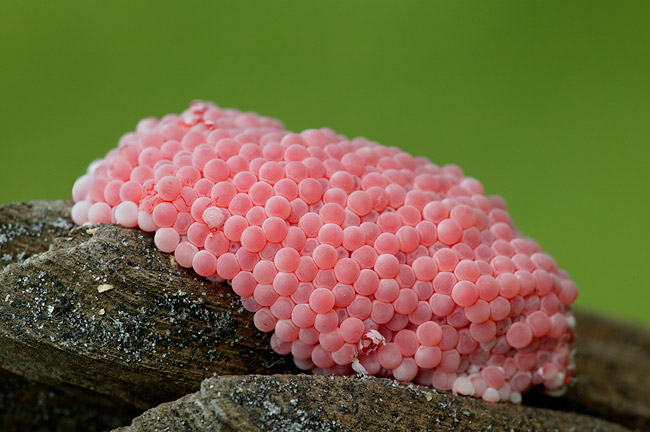
Snails produce 20-80 eggs are spherical and translucent, eggs laid in the ground under the stone. After several weeks of snail eggs will hatch and the shells will be enlarged to follow growth


Food snails are plants that are picked from the result of his trip using his small teeth are shaped such as grated.


The latter is the uniqueness of the shell of a snail is in addition to functioning as a protection but it can also function as the lungs. Gas exchange between air and blood occurs in the wall of hole-rich palleal blood vessels.
READ MORE - Let's Know the Ins and outs of Snail

Tuesday, February 15, 2011

Why Most Medical Experiments Using Rat?

Rat, this little animal have some advantagae in the lab. Do you know why the rat is often used in medical experiments? 

It turned out that mice have a significant role in medical experiments. Starting from the formulation of new cancer drugs to test dietary supplements, the mice play an important role in the new medical miracle.


In fact, according to the Foundation for Biomedical Research (FBR), 95% of lab animals are mice. Scientists and researchers rely on mice for several reasons. One of these, rodents are small, easily stored and maintained and can adapt well to new environments.

These animals breed rapidly and short-lived (2-3 years) so that several generations of mice can be observed in a short time.

In addition, mice are relatively inexpensive and can be purchased in bulk from commercial manufacturers breeding of rodents for research. Generally, mice are obedient and easy to handle animal researchers, although there is some kind of difficult to handle.

Most medical laboratory mice are genetically almost identical, except for gender. According to the National Human Genome Research Institute, it helps a uniform result of medical experiments. As a minimum, the mice had the same race.

Another reason rats were used as a model of medical tests is their genetic, biological and behavioral characteristics very similar to humans, and many symptoms of the human condition can be replicated in rats.

"Rats are mammals that have a lot of processes such as humans and can be used to answer the question a lot of research," said representatives of the National Institutes of Health (NIH) Office of Laboratory Welfare Jenny Haliski.

Over the last two decades, the similarity is even stronger. Now, scientists can develop a 'transgenic mice' who carry similar genes cause human diseases. Rats also make research efficient because of anatomy, physiology and genes are well understood by researchers.

Some mice SCID (severe combined immune deficiency) are naturally born without immune systems and can become a model study of normal and malignant human tissues. Here are examples of human disorders in which rats were used as a model.

Hypertension, diabetes, cataracts, obesity, seizures, respiratory problems, deafness, Parkinson's, Alzheimer's, cancer, cystic fibrosis, HIV and AIDS, heart disease, muscular dystrophy, spinal cord injury.

Rats are also used for anti-addiction drug testing of potentially ending drug addiction.

"Using animals is important for scientific understanding of biomedical systems that lead to medication, therapy and healing is useful," said Haliski.
READ MORE - Why Most Medical Experiments Using Rat?

Monday, February 14, 2011

Facts about the Crocodiles

Crocodiles are one of the reptiles that all people would know about it. But behind it all, saved the other facts about the crocodile.

Unique Facts about crocodiles # 1 ~
Crocodiles are reptiles animals that have a physical form similar to the giant lizard.


Unique Facts about crocodiles # 2 ~
crocodile tail act as paddles when swimming, thus helping to move fast in the water.


Unique Facts about crocodiles # 3 ~
In addition to very quickly move in the water, crocodiles are also able to walk on land with a speed of 28 miles per hour or about 45 km / hr.

Unique Facts about crocodiles # 4 ~
A crocodile can not sweat because they do not have sweat glands, crocodile body heat out through the mouth by way of a yawn.

Unique Facts about crocodiles # 5 ~
The largest crocodile ever found was the type of saltwater crocodiles or salt water with the length reaches 6.5 meters.

One type of saltwater crocodiles, but it seems that crocodiles have only 3-4 meters long.
Unique Facts about crocodiles # 6 ~
While the crocodile has the shortest maximum growth is Caviers Dwarf crocodile species Carma who only has a length of 1.5 meters.

Unique Facts about crocodiles # 7 ~
If given the danger, the mother crocodile can enter their children into the mouth. Not to be eaten, but that their child is safe from danger. This is similar to the tilapia fish in similar circumstances as well.

Unique Facts about crocodiles # 8 ~
Crocodiles can live up to 60 years old. Almost the same as modern humans.

Unique Facts about crocodiles # 9 ~
His tongue stuck in their mouths crocodiles and crocodiles can not menggerakkanya free like us.

Unique Facts about crocodiles # 10 ~
Crocodiles also have 4 labyrinth in the heart so similar to humans anymore.
READ MORE - Facts about the Crocodiles